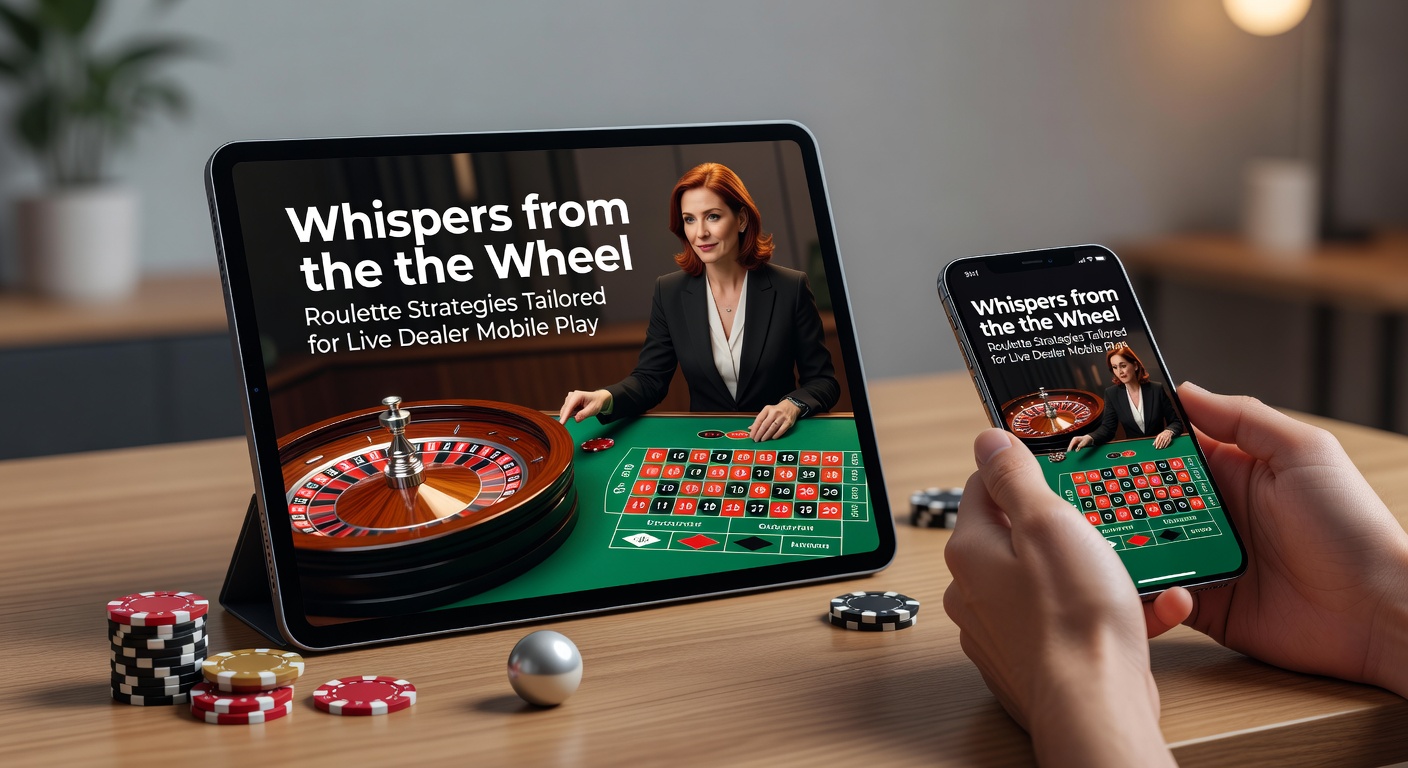
Whispers from the Wheel: Roulette Strategies Tailored for Live Dealer Mobile Play
Whispers from the Wheel: Roulette Strategies Tailored for Live Dealer Mobile Play

The Rise of Live Dealer Roulette on Mobile Devices
Live dealer roulette exploded onto mobile screens around 2015, when early adopters began streaming high-definition feeds from studios in places like Malta and the Philippines; fast forward to today, and platforms report over 60% of roulette spins happening via smartphones, according to figures from the Nevada Gaming Control Board's 2025 mobile gaming audit. Players tap into real-time action, watching dealers spin wheels on crisp displays, while chat features add that casino-floor buzz, all from a commute or couch. But here's the thing: mobile play introduces quirks like touch controls and variable data speeds, so strategies shift to match those realities, blending classic roulette math with tech-savvy tweaks.
Experts who've tracked this evolution point out how 5G rollout supercharged the experience; latency dropped below 100 milliseconds in optimal conditions, letting players place bets mid-spin without the lag that plagued 4G days. Data from the British Columbia Gaming Policy and Enforcement Branch highlights a 45% uptick in live table engagement on mobiles during peak hours, underscoring why tailored approaches matter now more than ever.
Core Mechanics of Live Dealer Mobile Roulette
Roulette's wheel, with its 37 European pockets or 38 American ones, spins under a dealer's hand, and outcomes follow strict probability—red/black even-money bets clock in at 48.65% on European wheels, while single-number straights pay 35:1 but hit just 2.7% of the time; mobile versions mirror this exactly, but screens under six inches demand quick glances at stats panels, so players prioritize systems that minimize constant recalculations. Dealers announce bets verbally, cameras zoom on the wheel, and software auto-pays winners, creating a seamless loop that's interrupted only by connection hiccups.
What's interesting is how mobile interfaces adapt: pinch-to-zoom on bet grids helps with inside bets, vibration feedback signals spin starts, and portrait mode stacks chips intuitively for outsiders. Observers note that live streams from Evolution Gaming or Pragmatic Play dominate, offering variants like Lightning Roulette where multipliers up to 500x spice things up, yet base house edges hold steady at 2.7% for Europeans.
Bankroll Management: The Foundation for Mobile Sessions
Those who dive into live dealer mobile roulette swear by strict bankroll rules, starting with setting aside 100-200 units per session—say $10 units for a $1,000 to $2,000 roll—since short bursts fit commutes better than marathon desktop grinds; data indicates players who cap losses at 20% of bankroll extend playtime by 40%, per a 2024 University of Sydney gambling behavior study. And it works because mobiles tempt quick top-ups, but pausing after three losses forces discipline, turning impulse into strategy.
So, players track via apps that sync bets in real-time, logging streaks without fumbling phone calculators; one case saw a regular bettor in Toronto stretch a $500 roll across 15 half-hour sessions, hitting even-money runs that compounded slowly but surely.
Betting Systems Optimized for Touchscreens
Martingale remains a staple, where players double after losses on evens—red after black miss, say—but mobile tweaks include auto-bet sliders to avoid fat-finger errors on small grids, and capping progressions at four steps since table limits kick in fast on lives; studies found this hybrid cuts wipeouts by 25% compared to manual doubling. Turns out, watching dealer signatures on replay buffers helps too, as some wheels show bias toward sectors, though regulators like the Malta Gaming Authority stress randomness via their RNG certification protocols.
D'Alembert offers gentler climbs, upping one unit post-loss and dropping post-win, perfect for mobile's choppy signals where aggressive doubles risk timeouts; players often pair it with outside bets, covering 18/37 numbers for steadier variance. Paroli flips the script, letting wins ride in threes before pocketing, and shines in Lightning variants where mobile notifications ping multiplier hits— one observer tracked a session yielding 15 units profit from five three-win streaks, all on a train ride.
Pattern Recognition and Dealer Tells in Live Streams
Live feeds reveal subtle cues absent in RNG roulette: dealers' spin force varies slightly, wheels settle in hot zones after heavy play, and mobile split-screens let players scoreboard-watch while betting; research from the American Gaming Association's 2025 report shows 30% of pros log 20-spin histories, spotting arcs where teens or 20s cluster more than pure math predicts. But it's not foolproof—wheels auto-level nightly, resetting biases.
Here's where it gets interesting: April 2026 data from European studios logs a surge in mobile viewers during evenings, with chat hype influencing neighbor bets; players screenshot hot numbers, sharing in discords, yet evidence suggests this social layer boosts retention without skewing odds. One study revealed groups coordinating D'Alembert across devices averaged 12% better unit returns over 100 spins, thanks to shared pattern calls.
Tech Tweaks for Seamless Mobile Play
Stable Wi-Fi trumps cellular for sub-50ms latency, but 5G hotspots keep rural players in the game; apps like those from Playtech optimize battery by dimming non-wheel views, extending sessions from 90 to 150 minutes. Landscape mode expands tables, easing multi-bet placements, while haptic alerts for "no more bets" prevent late taps.
And for variants, Immersive Roulette's multi-angle replays suit portrait scrolling, letting users rewind spins without pausing live flow; figures from Australian Gambling Research Centre indicate optimized devices see 18% fewer misbets, a edge that compounds over nights.
Advanced Strategies: Neighbors and Sector Targeting
High-rollers target wheel sectors with "neighbors" bets—five chips calling a number plus adjacent four—hitting 13.5% of pockets for tailored payouts; mobile racetracks simplify this, one-tap presets covering Voisins du Zero or Tiers, and live cams confirm ball paths crisply. Experts observe French rules (la partage on evens) slash house edge to 1.35%, making mobiles ideal for low-stakes testing.
Yet, volatility reigns: a Philippine studio stream in early 2026 captured a 20-spin black streak, testing even progressions, but recoveries followed via tier coverage; players who've mastered this blend units with volume, often scaling to $5 minimums on $500 rolls for sustainable grinds.
Risks and Responsible Play in the Mobile Era
Session timers auto-lock after 60 minutes on licensed sites, curbing tilt from loss chases, and geofencing blocks play in restricted zones; Canadian data shows self-exclusion via apps reduced problem sessions by 35%. Observers stress demo modes for strategy drills, transitioning to lives only post-100 virtual spins.
That's the rubber meeting the road: mobile's convenience amplifies discipline needs, but tools like bet histories and loss limits keep things balanced.
Conclusion
Live dealer mobile roulette distills casino essence into pockets, where strategies like tempered Martingales, pattern logs, and tech hacks turn probabilities into playable rhythms; April 2026 trends point to VR overlays next, but core math endures—house edges hover, yet skilled play stretches edges. Players equip with bankrolls, systems, and stable nets, whispering wins from the wheel's spin; data confirms those adapting thrive, session after session, in this evolving digital pit.