Tennessee Governor Bill Lee Signs Legislation to Prohibit Sweepstakes Casinos
Written by Zoe Bauer · May 23, 2026

Tennessee Governor Bill Lee Signs Legislation to Prohibit Sweepstakes Casinos
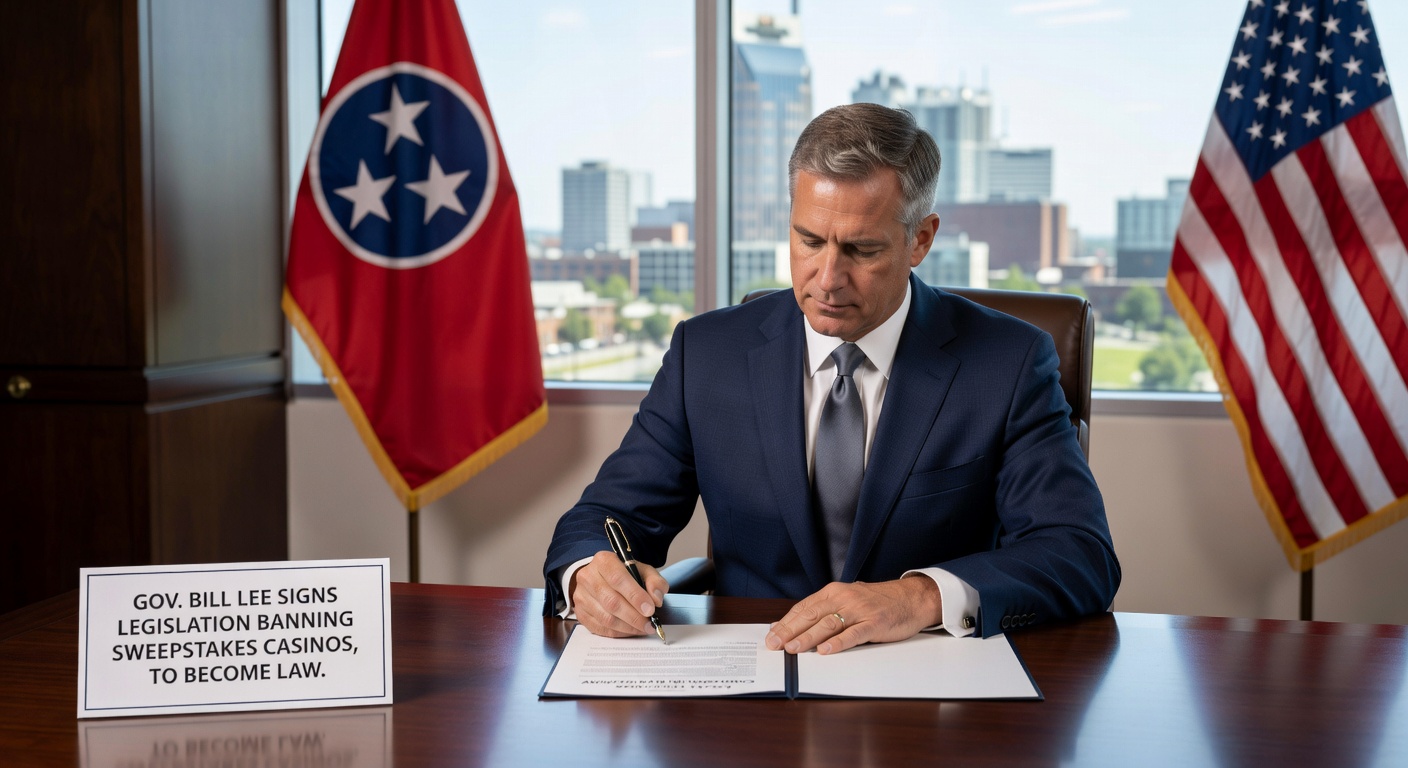
Tennessee Governor Bill Lee has signed legislation that bans sweepstakes casinos and this measure takes effect as state law to prohibit operations relying on sweepstakes-style promotions for casino-like games, adn the development comes after extended periods of regulatory scrutiny directed at such venues according to reports from industry observers. The new statute targets businesses that have used promotional sweepstakes formats to deliver games resembling slots and table offerings without traditional licensing structures, while state officials have clarified that the prohibition addresses a specific model of gaming promotion rather than all forms of sweepstakes activity across other sectors.Details of the Signed Measure
Under the provisions now enacted, venues operating sweepstakes casinos face restrictions that eliminate their ability to offer electronic gaming devices through sweepstakes entries, and this shift follows reviews by state regulators who examined compliance patterns over recent years, whereas the legislation establishes clear definitions for prohibited activities including the use of sweepstakes points or entries to access casino-style outcomes.
Officials have outlined enforcement timelines that position full implementation for May 2026, giving existing operations time to adjust their business models or cease the targeted promotions, and this phased approach allows for administrative preparations while preventing abrupt disruptions in related commercial activities.
Background on Sweepstakes Casino Operations
Sweepstakes casinos have functioned by providing customers with free entries or points that unlock games modeled after casino formats, and this approach emerged in various states as a way to navigate gaming regulations without direct wagers on outcomes, yet Tennessee regulators identified specific instances where these promotions crossed into regulated territory according to documentation from oversight bodies.
Research from gaming policy analysts indicates that such operations often combined internet-based access with physical locations, creating hybrid setups that drew attention from enforcement agencies, while data collected during prior audits revealed patterns of player engagement that prompted legislative responses in multiple jurisdictions.
Regulatory Scrutiny Leading to Action
State agencies conducted ongoing examinations of sweepstakes venues that included site visits and financial reviews, and these efforts highlighted concerns over player protections along with tax reporting consistency, whereas the resulting legislation consolidates prior findings into a unified prohibition that applies statewide.
Figures from regulatory reports show an increase in complaints and compliance checks related to sweepstakes promotions during the preceding two years, and this accumulation of information contributed directly to the bill's advancement through the legislative process before reaching the governor's desk for signature.
Broader Context and Related Developments
Similar regulatory actions have appeared in other states where authorities addressed comparable gaming models, and Tennessee's approach aligns with efforts to maintain consistent oversight of all casino-style activities regardless of promotional framing, while industry groups such as the American Gaming Association have tracked these trends across regions.
Analysts from policy research centers note that the ban focuses narrowly on sweepstakes mechanisms tied to gaming, leaving room for legitimate sweepstakes uses in non-gaming contexts like retail promotions, and this distinction helps clarify the scope for businesses operating in adjacent markets.
Implementation and Future Outlook
State enforcement teams prepare for the May 2026 effective date by developing guidelines that detail reporting requirements and transition procedures for affected operators, and these preparations include coordination with local authorities to ensure uniform application of the new rules across counties.
Observers from legal and compliance fields point to the legislation as part of a wider pattern where states refine definitions around emerging gaming formats, and data from prior cases in other regions demonstrates that clear statutory language reduces ambiguity during enforcement phases.
Conclusion
The signing by Governor Bill Lee establishes a firm boundary against sweepstakes casinos in Tennessee, and the measure integrates into the state's existing framework for gaming regulation while setting the stage for changes that unfold by May 2026, with related documentation available through sources such as SBC Americas coverage that detail the progression of similar policies.
Those monitoring the sector expect continued attention to compliance as the deadline approaches, and this development underscores how regulatory scrutiny translates into legislative outcomes that reshape operational landscapes for specific gaming formats.